Proposal Procedure:
Be sure to login to the website first. Then, submit your grant application through the link here once it becomes available. Please follow all other instructions in the Application Guideline link at the top of this page.
Proposals and all supporting information (including the cover page) should be submitted as a single document saved as a PDF file in the format of:
Senior_Research_Grants_PILastname_PIFirstinitial.pdf
Please be sure that all necessary information is included with the application and it is a single document. Incomplete files and misnamed files are unlikely to be funded.

Md Sayeed Abu Rayhan & Sumaiya Islam were funded for their grant entitled: Trithorax (trx) Group and Polycomb (Pc) Group Regulation of Seven Up (svp) Cardiac Progenitor Cell Division and Patterning. Congenital heart defects are among the most common birth defects, and therefore, a pressing need exists to understand the genetic basis and the mechanisms of these developmental defects. The Drosophila melanogaster (fruit fly) embryonic heart provides an excellent model system to investigate the developmental function of conserved cardiac regulatory genes, such as the Hox genes and the genes that regulate their expression.
Their collaborative project investigates how the trithorax (trx) group and Polycomb (Pc) group genes control the divisions and patterning of Seven up (Svp) cardiac progenitor cells during embryonic heart development by regulating Hox gene expression. By using the Drosophila embryonic heart as an experimental model, they aim to investigate the role of trx, Pc, and key trxG/PcG genes in cardiac patterning and development. These studies will enhance the understanding of how genetic lesions affect the cardiac developmental program and cause congenital heart defects.

Jeffrey Pruet & Danielle Orozco-Nunnelly were funded for their grant entitled: Identifying Novel Medicinal Plant Compounds to Combat Infection: an Interdisciplinary Research Project This project is aimed at discovering new antimicrobial compounds from plant sources. This project is a collaboration between Dr. Orozco-Nunnelly in the Valparaiso University biology department and Dr. Pruet in the chemistry department. They have an on-site medicinal garden where students grow and harvest various plants with ties to traditional medicine, and screen extracts of these plants for their antimicrobial effects against a panel of different bacteria and fungi. After compounds are identified from these crude extracts, structural variants are then synthesized in the Pruet lab to explore altered antimicrobial effects. With the constant rise of multi-drug resistant pathogens, the discovery of new drug candidates is critical.

Michael Thompson was funded for the grant entitled: Modification and Chemical Regulation of Inflammatory Mediators LTA4 Hydrolase and Lactoferrin. His lab studies the regulation of inflammation, particularly during the initiation phase. They employ a combination of enzyme kinetic analysis and protein-protein interaction techniques to analyze the interaction and biochemical regulation of proteins that are involved in regulating inflammation and converting the tissue toward a pro-inflammatory physiology while mitigating the effects of innate immune responses on normal cells.

Christopher Schmidt was funded for his grant entitled: Identification of the Flora Mastodon Site Faunal Remains.The funded research concerns analysis of faunal remains from the late Pleistocene/Early Holocene Flora Mastodon Site in Carroll County, Indiana. To date, the site has yielded remains from two extinct animals, the American mastodon and giant beaver, as well as dozens of species of extant animals. It also produced the oldest dated human artifact from Indiana, dating to over 10,000 years ago. The proposed work focuses on detailed analysis of faunal remains to reconstruct the environment within which Ice Age megafauna, and later the first humans in Indiana, lived.

Suman Neupane was awarded for his grant entitled: Dating the Evolutionary Tree of the Plant Tribe Spermacoceae (Rubiaceae) Using Museomics of Rare and Extinct Oceanic Island Endemics. The research focuses on the evolution and diversification of plants, especially within the pantropical tribe Spermacoceae (~1500 species) in the coffee family (Rubiaceae). In their lab, they estimate phylogenies using DNA data and integrate them with morphological traits and geographic distributions to study how, where, and when plant lineages evolve, and we use these evolutionary relationships to inform taxonomy and understand diversification within the group.
By combining field observations with phylogenetic and genomic approaches, they investigate how shifts in breeding system, growth form, and ploidy level, together with processes such as hybridization, genome duplication, and ecological adaptation, drive speciation and macroevolutionary radiations in Spermacoceae. Their work aims to clarify how microevolutionary mechanisms scale up over deep time to generate the remarkable biodiversity and endemism characteristic of tropical mountains and islands.

Raphel Rodrigues Perim was awarded for his grant entitled: Presynaptic Calcium and Sharp-Wave Ripples: Defining Cav2.1 Mechanisms of Memory Consolidation. His research uses advanced data analysis and neurophysiological techniques to uncover the mechanisms of synaptic plasticity across respiratory, cardiovascular, and hippocampal circuits. I am particularly focused on how calcium-dependent signaling and network oscillations shape long-term adaptations—ranging from respiratory motor plasticity to cardiovascular reflex modulation and hippocampal processes underlying memory formation and consolidation. By combining large-scale electrophysiological recordings with machine-learning-based analysis tools, my work aims to define how synaptic and circuit-level mechanisms support physiological function and behavior. I am also committed to mentoring osteopathic medical students through hands-on research experiences that advance our understanding of neural and physiological plasticity..
Takuya Akiyama was awarded for a grant entitled: Elucidate the Impact of Biomechanical Force on Epithelial-Mesenchymal Transition during Tumor Progression. Her research group investigates how genetic heterogeneity arising from somatic mutations alters cell behavior and ultimately disrupts tissue function over time.
Brian Gall was awarded for a grant entitled: Tetrodotoxin and Pyrethroid Insecticide Resistance in Caddisfly Larvae Coevolving with Toxic Newts (Taricha Granulosa). In the western United States, there is an coevolutionary arms-race occurring between newts and snakes. Newts possess tetrodotoxin (TTX) in their skin as a deterrent against predators. One group of predators, garter snakes, has evolved resistance to the toxin and readily consume them. This selection has led to extreme traits in both species, such that newts can be super toxic and some populations of garter snakes are super resistant. His research investigates another player in this system, caddisfly larvae. Female newts deposit small amounts of TTX in their eggs, likely to serve as protection against egg predators. Just like snakes, caddisfly larvae have evolved resistance to the toxin and eagerly consume the eggs. Shockingly, we also discovered the species is resistant to Pyrethroid insecticides, likely due to intense historical DDT exposure and modern agricultural practices. His research will investigate the extent of this resistance (TTX and Pyrethroids) across the geographic range of the interaction, by evaluating the physiological resistance of a number of populations to both chemicals. In addition, he will evaluate the underlying genetic mechanisms of resistance by sequencing the sodium channels protein from these animals, which is the target site for both chemicals. These results will help elucidate the role of caddisflies in shaping the evolution of toxicity in newts and are critical to our understanding of how multi-species interactions effect coevolutionary dynamics.
Bowen Zhang & Dorothy Gidisu were awarded for a grant entitled: Assessing Potential Coal-Ash Contamination in the White River: A Case Study in Noblesville. The research investigates potential coal ash contamination in the White River at Noblesville, Indiana, focusing on heavy metals and metalloids such as arsenic, boron, cadmium, selenium, lead, and mercury. By analyzing water and sediment samples collected upstream and downstream of an unregulated coal ash landfill, the study aims to identify contamination levels, assess spatial patterns, and generate baseline data to support evidence-based monitoring and regulatory decisions for IDEM and local policymakers in strengthening surface water monitoring, improving landfill oversight, and setting evidence-based water quality standards.

Dr. Stephanie Hill from Rose-Hulman Institute of Technology was funded for her grant entitled: pH dependence of Parasporin-4 pore formation in large unilamellar vesicles (LUVs). She is investigating cellular conditions around a pore-forming protein from a bacterium and its potential use in treating mammalian cancers.

Elaine Hoffman, a PhD candidate, and Dr. Richard Phillips, the advisor, from Indiana University were funded for their grant entitled: To what extent can tree nitrogen demand destabilize soil organic matter? They are investigating the ability of trees and their associated fungi to destabilize Nitrogen from soil surfaces which will give us a better understanding of how forest ecosystems will respond to global environmental changes.

Rajnandani Katariya, a PhD candidate, and Dr. Shaad Ahmad, the advisor, from Indiana State University were funded for their grant entitled: Unraveling the mechanism of Fox transcription factor-driven Polo kinase activation during cardiac progenitor cell division. Their project is a genetic study investigating a regulatory pathway in the development of the fruit fly heart.
Dr. Natalie Keirns from Ball State University was funded for her grant entitled: Weight Stigma as an Overlooked Driver of Inflammation and Cardiovascular Disease Risk. She is investigating the relationship between negative attitudes toward obesity and chronic stress that could lead to increased cardiovascular disease in some adults.
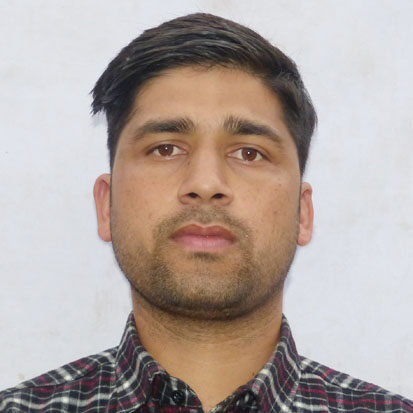
Amrit Ojha, a PhD candidate, and Dr. Mahamud Subir, from Ball State University were awarded for their grant entitled: Understanding Interaction of Microplastics with Organic Contaminants – A Laser-Based Study. They are using a special type of spectroscopy to investigate the potential risks of how microplastic interact with environmental organic pollutants in aquatic ecosystems.

Dr. Erika Sorensen-Kamakian at Wabash College was awarded for her grant entitled: Determining the relative contributions of proteasome and proteases to proteostasis in C. elegans. She is investigating a factor (temperate) that influences age-related disease as a result of an imbalance between functional and damaged proteins.

Dr. Yunting Yin at Earlham College was awarded for a grant entitled: Voice, Language, and Longevity: Identifying Digital Biomarkers for Dementia Using Speech and Language Analysis on Veteran Interviews with Cause-of-Death Data. She is investigating the use of digital biomarkers to help determine early stages of neurological diseases in humans with an aim of early detection for increased effective management and intervention.
Copyright © 2026 Indiana Academy of Science. All rights reserved.